Showing posts with label Munce. Show all posts

Monday, May 22, 2023

William Munce's Personal History

Read William Munce's Personal History here 

In 1960, William (Bill) Munce wrote his personal history at the request of his daughter, Elsie Munce Caraway. Transcriptions of the personal history are available to view on FamilySearch and Ancestry. I am providing a link to a backup for those unable to access those sites.

Read William Munce's Personal History here

Sunday, May 21, 2023

Poems by James Munce

Read Poems by James Munce here 


James Munce published a volume of poetry in the mid-1800s. According to the University of Pennsylvania's online books page the first edition was probably in 1863. A second edition (the one that the family is familiar with, has copies and an original of) was published in 1881 as "enlarged". And a small note under the author's name states "Author of 'The Three Kirks'" which is a work that hasn't been located to my knowledge. 


Google books has digitized the 1881 edition in full. I have downloaded the pdf and made it available for download in case Google books ever removes access to it. 

Read Poems by James Munce here 

Saturday, October 17, 2009

"My Dear Native Home" by James Munce


There’s a sweet little village in Erin’s green Isle,
Where the beam of pure friendship for ever does smile-
Still dear to my heart whatsoever I roam, -
‘Tis the place of my birth, ‘tis my dear native home.
The smiles of the summer there longest remain,
And the rose sheds its odour through Daniel’s domain,*
Where the maid and her lover are welcome to roam
O’oer the beautiful walks of my dear native home.
By the clear purling stream leading to the mill,
Where the willow and evergreen hang o’er it still-
When it falls in the fish pond and spreads out in foam-
Show the grandeur and taste of my dear native home.
Its old Danish moat from afar may be seen,
With its round winding path and strong magazine-
With the flag of old England that floats o’er the dome,
Sheds a glory and grace round my dear native home.
The spire of the church in its beauty appears,
Unhurt by the malice or mildew of years;
To the sleepers around it fond memory does roam,
Who wander’d with me round my dear native home.
Sweet scene of my childhood, still dear to my heart,
I can meet you in smiles, but in tears will depart;
For the want of employment compels me to roam
Away from the shades of my dear native home.
Fair shade of Carnathon, how grand you appear!
But where are the comrades who oft wander’d here?
Do they sleep in the dust, or like me do they roam,
And sigh for one look of their dear native home?
Wherever they wander, forget they ne’er will
The stone of remembrance that stands on the hill,
Where the maids in the evening light-hearted do roam,
And sing the lov’d songs of my dear native home.
Those dear hallow’d scenes I may ne’er see again;
May peace, love, and friendship still with them remain’
Till my heart cease to beat and be laid in the tomb,
With delight I’ll look back to my dear native home.
Notes from Jeanette's Trip to No. Ireland in 2001

17 Sep 2001

"What a wonderful time we had in Northern Ireland and we have found out so much information on James Munce - I spoke to the undertaker last night and he is a walking history book and he knows the house that Agnes Cleland lived in and there family is now called Cleland McVey so that is why we cannot find much on her family. He spoke to these people for me and has found out that the poem on Carrickmannon was in every household in Carrickmannon in the early 1880 as he was their idol and known as the "Robbie Burns" of Donaghadee a lot of his poems were made into songs and he is now going to get me more information. I have also found out that an Andrew Munce was the Headmaster of the Donaghadee school and he is trying to find out if he was related to James Munce it was from 1900 to 1950 he was Headmaster of the school. Anne, I met with W.G. Pollock he was about 80 plus and was a Headmaster he is the man who wrote the book "Six miles from Bangor, Donaghadee and the Copeland Islands "- well you know that in that book James Munce is mentioned as the Robbie Burns of Donaghadee and they have a poem in the book that he wrote about Donaghadee I have photocopied this in the library - and now I am trying to get a copy of the book - so if Wayne can see any more copies of this could you get it for me as they are out of print and the last printing was in 1982. Pollock was an unusual man, very frail and I feel that he was tired he was busy getting organised to go to Bangor on the bus but it was lovely meeting him - I met this man in a shop who knew him and he took Graham and I down to where he lives - so he had no warning that we were coming. The people in Ballygowan were wonderful and Betty and Dennis the undertaker and his wife are coming to Australia on the 4th October and they might come to Melbourne so I will let you know what happens.

"Well I am off to-day to the Mitchell Library I am now in Glasgow and Isabel I can see how Bruce loves this place it is wonderful and so beautiful, the people are so friendly and warm and I would say that beside Australia it would be heaven on earth to live except for the winter months.

"We are going to Edinburgh tomorrow and I will get the pages of the book of Poems that are missing from the copy we have and see the difference in the copies of the poems that were printed."

24 Apr 2002

"I went to Northern Ireland last year and it was a wonderful experience - I went to the school in Carrickmannon that James Munce had attended and met people in the area from Ballygowan which is next door to Carrickmannon and from Saintfield where Agnes Cleland came from. One of the people that I met and have also had come to Australia and stay with us whilst they were visiting Australia for a wedding in Brisbane was Denis Porter the Undertaker and his wife Betty from Saintfield - Denis before he came did some research on James and found that the poem that he had written on Carrickmannon in 1861 was in every household during that period and that some of the poems that had been written had been made into songs, I thought that this was interesting but unfortunately he did not know which ones.

"During the visit to Scotland Graham and I spent several days at the Mitchell Library in Glasgow photocopying the books of Poems of James, making sure that we had copies of all the poems that he had written. I have those here and I have decided that the easiest thing to do is to scan them into the computer so that you can all get the copies and just print them off. My cousins here all want copies and so do cousins on my grandmother's sisters side in Canada and in Sydney and Brisbane - the photocopying is expensive they charge here 20 cents a sheet and there are many many sheets so this is what I am going to do."

Friday, October 16, 2009

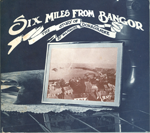
Six Miles From Bangor: The Story of Donaghadee by W.G. Pollock


I have finally located and acquired a copy of this little out-of-print book about Donaghadee, the hometown of James Munce. One of James Munce's poems is actually included in the book. I went hunting on the internet after re-reading some of the notes I had in my family history file from Jeanette's trip to Northern Ireland.

I have taken the time to scan every page in the book, lay out the pages in their original formate using InDesign, and then created a pdf file so everyone can download a copy of the book to read and reference at their convenience. Downloadable a pdf file of the entire book by clicking here.

~~Cindy Garber Iverson

Addendum from Jeanette:

"I bought this book some years ago on the computer from a book seller in Northern Ireland and when I was in Donagadee in 2001 I went to the Library and was going to photo-copy some of the book as James Munce was in there with one of his poems. Anyway, we went to lunch at the hotel and then went across to this little store opposite. I asked if they had a copy of the book. They informed me that they had no copies. There was this lovely gentleman there, and he said to me that he knew William Pollock and that he lived around the corner just down the street. He walked down the street with Graham and I and around the corner to this house that was right on the road -- knocked on the door and out came William Pollock. He was an elderly gentleman. He talked to me about the book and the research that he had done on James Munce. I tried everywhere to get a copy of the book -- but managed to get it when I came home."

Tuesday, July 15, 2008

Bill and El Munce's Yosemite Trip of 1912

Letter written to Elsie Munce Caraway by her father William "Bill" Munce:

Home 1-29-1960

Hello Kids:

Well, you have sure handed me a dilly of an assignment, requesting at this late date the mode and method of your arrival at 2010 East 16th St. in Oakland, Calif. (see photo at right) on April 15, 1913.


I'll have to go back to 1912 to get this tale off to the right start.

Our neighbors, named Garner, wife, and daughter, talked up a trip to Yosemite Valley, said trip to be made in a covered wagon and a team of horses.
Dad supplied the transportation and we russeled(sic) up the grub. So bright and early one July morning we hit the trail, and enjoyed every hour of the four days it took to reach Inspiration Point where we got our first glimpse of wonders of nature.


We made camp under the Royal Arch, and for about ten days we tell we were leg weary; and then went over to the North Fork were Mrs. Garner had a mother and brother on a sundown ranch close to a small Indian village where we stayed about a week...


...then took the trail back toward home by round about roads, arriving safely having spent about 25 days of dust and ashes with board and lodgings in the open. Believe me it was a close race as to who got the first bath. I ran a close second.

Time marched on, and on one occasion I see mother making baby clothes and asked her how come? She said I had planted seed under the Royal Arch and that she was going to make a dady(sic) out of me which she did, for she wanted her baby born in Oakland so here we are back where we started from.

When my mother hears the news she was real tickled and told your mother-to-be that she had been with each of her daughters when their baby came, so she would standby.

On the 15th day of April, old Dr. Beckwith was on the job with all his equipment and you took your own sweet time coming out to see what kind of company you were forced to keep.

You were a red, rosy, package, and I can still hear my mother singing, crying, and praying as she was giving you your first bath. She never got through telling folks of her new granddaughter's big blue eyes and ready grin.


She was the proudest Granny in town and was happiest when she had you in her arms and sang to you some of the old time scotch lulabyes(sic).

Hope this is what you wanted; but if it isn't sing out and I'll try again.

Dad

Below are scanned images of the original letter


Granny Jessie and Little Elsie's Special Connection

Grandma Jessie Rae Munce holds her baby granddaughter Elsie Louise Munce (later Caraway)

Born to parents Bill and El Munce at home on April 15, 1913 in Oakland, California, little Elsie Louise Munce became the apple of her grandmother Jessie's eye. Little Elsie's father, Bill, wrote:

"Little Elsie was a red, rosy package when she arrived, and I can still hear my mother singing, crying, and praying as she was giving Elsie her first bath. Mother never got through telling folks of her granddaughter's big blue eyes and ready grin. She was the proudest Granny in town and was happiest when she had Elsie in her arms and was singing some of the old Scottish lullabies."

Grandma Jessie Rae Munce holds a slightly older Elsie Louise Munce (later Caraway)

Monday, July 14, 2008

A Portrait and A Poem


The above Munce/Caraway family portrait has a handwritten poem on the back by Bill Munce, the patriarch of this Munce clan.

If we counted our blessings as we count our little pains
If we soon forgot our losses and remembered just our gains
If we tried to be as big and fine as you and I should be
What a wonderful and happy place this world of ours would be

Photo identification:
Location: Bill and Erma's house at 6652 Brann Street, Oakland, California
Date: possibly 1959
Top (left to right):
Fred Munce (son of Bill Munce and Elsie Pump Munce)
Ann Caraway (daughter of Jake and Elsie Caraway)
Middle (left to right):
William "Bill" Munce (father of Elsie, Jack and Fred)
Patricia Munce (daughter of Jack and Jane Munce)
Sue Caraway (daughter of
Jake and Elsie Caraway)
Margaret "Pat" McCauley Munce (wife of Fred Munce)

Bottom (left to right):
Elsie Munce Caraway (daughter of Bill and Elsie Munce)
Erma Hazelton Munce (third wife of Bill Munce)
Kathleen Munce (daughter of Fred and Pat Munce)
Joanie Caraway (
daughter of Jake and Elsie Caraway)
John Munce squinting boy (son of Fred and Pat Munce)
Richard Munce (
son of Jack and Jane Munce)
John "Jack" Munce (son of Bill and Elsie Munce)
Jane Judd Munce (wife of Jack Munce)

The Love Runs Deep


I had already planned to write about these two photos today before I realized it would mark the milestone of being the 200th post. Now the post seems even more appropriate for the occasion.

The two photos I'm sharing in today's post are of my great-grandparents, El and Bill Munce. I am very fortunate to have hundreds of candid photos like this of them, their families, their outings, their lives, and their silliness.

These two particular photos are part of the early part of an antique album that is in the loving care of my aunt. The album spans the entire 16 years of their marriage (their marriage ended prematurely due to El's tragic death after the birth of their youngest son).

The photos were taken around 1910 here on the rolling hillsides of the San Francisco Bay Area with my great-grandparents' simple little portable camera of the time (hence the slight blur in the photo of El). If the photos were in color, the hills would probably be a lovely green because that's when the wildflowers that Bill and El were out hunting and picking would have been in bloom--probably sometime around March.

Bill was a lover of gardening, grafting, planting, growing, and roses. I love this photo of him with an armload of wildflowers. This is my kind of man. The photo of El with the armful of flowers seems expected, but not the one of Bill. It's literally a snapshot in time--a special moment between two young honeymooners captured in perpetuity. I can imagine them out as a couple traipsing these hills I love so much. I can imagine their excitement at taking the snapshots and then their anxious anticipation for when they would get the photos developed so they could relive the moment.


I'm glad they captured this moment. Somehow it gives me a sense of who I am. I feel a connection to them, to these hills, to the flowers. It all helps me feel grounded, rooted. My heart swells with a gratitude for the legacy they have left--a legacy of loving nature and gardens that has been passed down through their daughter to her daughter to me.

I garden in almost the same climate as my great-grandfather gardened in only a half-hour drive away from where he gardened. When I am out in my garden tending my fruit trees, pruning my roses, or tying up my climbing vegetables, I feel him near. I've seen so many photos of his garden, I know it is much like my own.

Thank you, Grandad, for being the man that you were. Thank you for loving all the things that I love, especially the roses. Thank you, Grandma El, for loving the flowers and for loving nature so much that you hiked the hills and valleys in those dresses you had to wear. And thank you, both, for loving each other as deeply as you did.

The Easiest Way to Make a Difference

Many in the world today unite their voices in speaking about making our world a healthier and more beautiful place to live by being environmentally aware.

I have an interesting perspective about this issue, one that I've come to realize is quite unique. I hope that by sharing it, I can somehow make a small difference.

One does not have to win a Nobel Peace Prize, make a film, donate thousands upon millions of dollars, or become a chest-thumping activist to make a difference in this world as far as the environment is concerned. One simply has to be a good steward over that which one has been given and pass that legacy of awareness and good stewardship on to the next generation in one way or another. It's that simple. How do I know? Because I am a product of it!

Let me introduce you to a couple of true environmentalists--my great-grandparents, William and Elsie. They are pictured here riding mules during a long summer vacation in Yosemite National Park in 1912.

They traveled to Yosemite via covered wagon from their home in Oakland, California. By car on today's modern roads it is a 3-4 hour trip, so you can imagine how long it took in a covered wagon!

William ("Bill") and Elsie ("El") were simple city folk. They didn't have a lot of money. Bill was a metalworker and would have been considered "blue collar" nowadays. El was a homemaker who was active in her community organizations. They were also nature-lovers. They loved the outdoors and took time for daytrips to enjoy the many beautiful outdoor areas around their local San Francisco Bay Area. During summers, they would enjoy longer vacations that were simple and inexpensive like trips to Yosemite.

Bill was an avid gardener and amateur horticulturist grafting fruit trees, growing roses, and maintaining a produce garden on his urban lot in Oakland. El had been raised by gardening parents, so she had a connection to gardens as well. Together they made room for gardens and a chicken coop on their city lot. Bill and El's three children (Little Elsie, Jack, and Fred) grew up with gardens being a part of their upbringing.


Top: Bill holding his oldest, Little Elsie (Grammy) out in his garden (note the chicken coop behind him).
Second from top: Elsie (Grammy) and Jackie out in the family garden.
Third from top: Jackie out in the flower garden (note how close their neighbors are and also note that they don't have the traditional lawn).
Bottom: Fred helping in the garden with a watering can almost too big to lift.

Once they had children, Bill and El continued to take daytrips around the Bay Area to enjoy nature. And they also took their children on longer vacations to national parks throughout the state of California, including Yosemite. Camping and visiting national parks was an inexpensive way to have a family vacation. It was also a great way to get away from the city and enjoy the beauties of nature. No longer needing to take a covered wagon, they took the family automobile on these excursions. Although not recommended by any means, Bill went so far as to feed the bears at Yosemite to have a "close up" nature encounter (pictured at left).

This love of nature and gardening was easily and very naturally passed on to Grammy (Elsie Louise).  Subsequently, Grammy passed that love of nature as well as a sense of stewardship over earth's many beauties to her three daughters (Ann, Sue and Joanie).

As a conservative suburban housewife in the 1960's, I know that Sue started early passing on those values and understandings to her own children. I was her first, so my early experiences are probably more well-documented photographically, but all three of us got the choice experience of being raised by a mom who was always gently telling us about those things in nature that we were surrounded by every day. My mom would matter-of-factly indentify trees, plants, and flowers for us and then shared some special childhood memory connected to them if there was one. And she would teach us "tricks" on how to identify them.

My mom took advantage of opportunities to take us to local petting zoos, natural history museums, and parks, so we could have firsthand experience with animals. These experiences helped us gain an understanding and love for animals which is an essential part of the foundation of an environmentally-conscious adult. My mother also did other unorthodox things. For instance, she knew I was fascinated with horses so sometimes after mowing the lawn she took me to feed the lawn clippings (and some carrots she brought along) to some horses at a nearby field. As opportunities arose, she would gently share her knowledge of how everything in nature is interdependent. We learned the "circle of life" long before it was ever portrayed in an animated motion picture. On family vacations to Disneyland, she would slip into the itinerary stops at the California Missions so we could see a bit of history and tour the gardens or visit the working farms that still existed. We aren't Catholic. This was just my mom's way of educating us about the environment in a stealthy but effective way.

Top: Me at about age 3 or 4 out on a nature outing in the wintertime.
Second from top: Me at age 2 at the Oakland Zoo hugging a goat.
Third from topt: Me feeding some horses our lawn clippings. My mom drove me and the clippings there, because she knew I loved horses.
Bottom: My sister and me out in nature in the wintertime.

My mom also had books about nature, gardening, and animals present in our family library. Whenever we wanted, we could pull a book off the shelf and browse. She was available to answer questions, but for the most part the journey of discovery in those books was a private one for each of us. Interestingly, one of my favorites when I was 5 or 6 years old was an Audubon Society guide to North American birds. As I became a more advanced reader there were books available to me such as the James Herriot All Creatures Great and Small series. I was welcome to take them and read them at my leisure. I ended up reading the entire James Herriot series over the course of a year on the school bus on the way to high school when I was a freshman. Those books gave me an understanding of man's relationship to animals that still impacts me today.

As an adult, all those understandings and values about the environment were part of me. The fibers are so intertwined with who I am, there is no question that I care about the environment and want to make a difference. I had learned through example that the best way to make a difference was to start with what I had control over--my own home.

In our first apartment as newlyweds, I planted tomatoes and flowers in pots on our front stoop and in the little narrow strips of dirt around our miniscule patio. Later when we moved to Rosehaven Cottage, the potted Red Japanese Honeysuckle (a favorite of bees and hummingbirds) and white "Princess Diana" Bower Vine that were on that front stoop became a part of the Rosehaven Cottage garden and are still here today growing madly up the front pergola.

Rosehaven Cottage's gardens were a blank canvas. The lot isn't terribly large, but I saw in it the potential to become the gardens I had always wanted. Rosehaven Cottage sits in an interesting geographical location of being somewhat rural but just within sight of an oil refinery's stacks. So there is an odd combination of industry and nature happening all at the same time.

I scoured the internet for resources on how to plant a garden that would be friendly to the animals and insects that already lived here and provide them with a home in the midst of industry. Through the help of my mother (again giving me gentle guidance), I found the National Wildlife Federation's website on how to build your own backyard wildlife habitat. I used their guidelines and eventually certified the Rosehaven Cottage gardens with their national registry.

Now I chronicle my experiences with my garden and backyard wildlife habitat here at my blog.

The Bottomline

The best, most effective, and easiest way to make a difference in this world is to start at home.

Educate yourself about what surrounds you. Learn why bees and other insects need water sources that you can easily provide for them in any setting. Learn what frog is keeping you up at night with its incessant ribbet-ribbet-ribbet. Learn how to use the hundred-year-old method of companion planting instead of using pesticides in your garden. Learn why it is better to let your flowers go to seed and not always have a perfectly coifed garden.

Learn, learn, learn! We've got an amazing tool available to us--the internet! So, why not use it?

Then implement what you've learned in your own living situation. As Bill and El proved, you don't have to live on a farm or be financially well-off to do it. A few potted plants on a fire escape makes a difference.

And once you've learned and begun to implement what you've learned into your own living sitation then gently pass that knowledge and experience on to the next generation through example.

It's as simple as that.